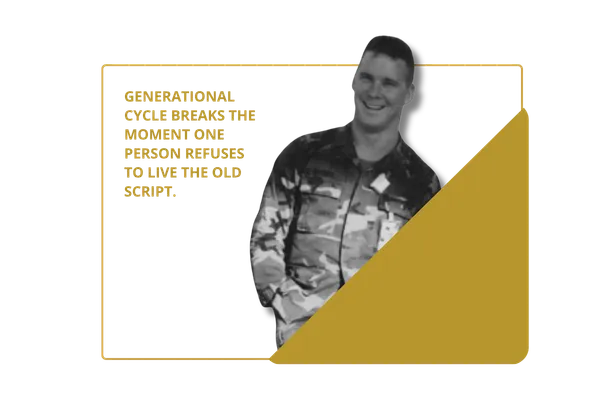
Breaking the Generational Cycle
My folks didn’t have money.
My mom was a nurse in a small town in Northern Idaho. My dad was trying to get a business off the ground. We were on food stamps for a stretch. They were good people doing their best with what they had.
But nobody at our dinner table talked about assets, cash flow, or ownership. The conversation was about making it to Friday.
That’s what a generational cycle looks like from the inside. It doesn’t show up with a label. It just feels normal.
You grow up thinking everybody worries like this. Everybody avoids risk like this. Everybody makes decisions based on what keeps the lights on for one more month. You do not realize you inherited a financial ceiling because, to you, it just feels like common sense.
That is why these cycles are so hard to break.
Scarcity Doesn’t Just Limit Income. It Shapes Identity.
Most people think a generational cycle is only about money.
Money is the visible part. The deeper issue is the thinking that comes with it. When you grow up around scarcity, your brain learns to protect before it learns to build. You get trained to avoid loss, not pursue opportunity.
That survival mindset makes sense when money is tight. It helps a family get through hard seasons. It keeps food on the table. It helps people stay cautious when one bad decision could create a real problem. But survival strategies do not always build wealth.
Over time, they become invisible ceilings. You start believing things that sound practical, but quietly keep you small. Rich people are lucky. Investing is gambling. Don’t ask for too much. Stay in your lane. Be grateful for what you have and don’t risk losing it.
Those ideas are not always malicious. Most of them were passed down by good people who were trying to stay safe.
Still, what protected one generation can limit the next.
And that is the hard part. The beliefs holding you back do not feel like beliefs. They feel like truth. They feel like your personality. They feel like who you are.
They’re not who you are.
They’re just what you were handed.
You Don’t Break Old Cycles in the Same Room That Created Them
Get around different people. Dan Sullivan wrote a book called Who Not How that changed how I think about growth. The core idea is simple: stop asking “How do I do this?” and start asking “Who can help me do this?” But there’s a deeper lesson in there for anyone trying to break a generational pattern, your next level of thinking won’t come from the same room you’ve always been in.
One of the biggest shifts in my life happened when I realized I could not build a different future with the same thinking that built my past.
That meant getting in different rooms.
For a long time, Samantha and I were living in an echo chamber. My ideas were her ideas. Her ideas were mine. We were working hard, but nothing new was getting in. No fresh perspective. No new standards. No better model for how wealth gets built.
That is a dangerous place to be, especially when you do not know it.
Because hard work by itself is not enough. You can work hard for 20 years and still be trapped in the same mental framework you inherited growing up. Same fears. Same assumptions. Same limits.
Everything started to shift when we got around people who thought differently.
People who talked about ownership instead of just income.
People who thought in decades instead of pay periods.
People who understood that wealth is not about looking rich. It is about controlling assets, generating cash flow, and building margin into your life.
That kind of environment changes you. Not overnight. But steadily.
Confidence Usually Comes After Action, Not Before
This is where a lot of people stay stuck.
They think they need to feel ready before they move.
That is almost never how it works.
The first time I was asked to raise capital for a deal, I did not feel prepared. I did not have a polished script. I did not have some perfect strategy. I just had an opportunity in front of me and a decision to make.
So I picked up my phone and started texting people from my contact list, starting with the letter A.
By the time I got to the G’s, I had $6.5 million committed.
That does not mean I was fearless. It means I moved before the fear left.
That is a major difference.
People who change their financial future are not always the smartest people in the room. A lot of the time, they are simply the ones willing to act while they are still uncomfortable. They learn in motion instead of waiting for certainty that never comes.
The cycle starts to break the moment you stop treating fear like a stop sign.
Learn the Language of Money or Stay Dependent on People Who Do
This part is non-negotiable.
If you do not understand the language of money, you are forced to rely on people who do. That is not a great position to be in.
You do not need to become a tax attorney or a Wall Street analyst. But you do need to know the basic rules of the game.
An LLC is a legal structure that helps separate business risk from your personal assets.
Depreciation is a tax rule that lets owners of real estate account for wear and tear on a building, even if that property is still producing income.
Earned income is money you work for. Passive income is money an asset produces after the work is set up.
That is not advanced finance. That is basic vocabulary.
But vocabulary changes behavior.
When money feels confusing, people avoid it. When they avoid it, they stay dependent. When they stay dependent, they stay behind.
The point of financial literacy is not to sound smart at dinner. It is to remove fear. Once money stops feeling mysterious, it becomes easier to make rational decisions. You stop treating investing like gambling and start seeing it for what it is: risk, reward, structure, and timing.
That is when progress becomes possible.
Small Improvements Compound Into Big Results
A lot of people think breaking a generational cycle requires one massive breakthrough.
Sometimes there is a breakthrough. Most of the time, there is discipline.
Real progress is often less dramatic than people want it to be. It looks like better habits repeated for a long time. One better conversation. One better decision. One better negotiation. One less lazy assumption.
My wife understands this at a level most people never do.
At the end of every year, she goes through our expenses and calls vendors to negotiate better rates. Cell phone. Cable. Insurance. Anything that can be improved gets reviewed.
That sounds small until you stretch it over 10 years. Or 20. Or 28.
Then it is not small at all.
That is how wealth gets built in the real world. Not from one flashy move, but from a long series of smart, disciplined decisions that compound over time.
Elevation is not an event. It is a system.
The Right Partner Can Change Your Trajectory
I need to say something here about Samantha.
We’ve been married 28 years. She has been beside me through every stage of this. From loading dollar bills into ATM machines at three in the morning to stepping into rooms I never imagined we would one day be in.

She has challenged my thinking. She has sharpened my decisions. She has seen things before I saw them.
There were times when I was prepared to keep grinding in something familiar because it felt safe. She was the one who knew it was time to sell the ATM business and step into something bigger.
That matters.
Breaking a generational cycle is hard enough on your own. Doing it with somebody who grows with you, questions your assumptions, and keeps pushing for better can change everything.
Who you build with matters.
The Real Prize Is a Different Starting Line for the Next Generation
None of this was easy.
I grew up without money. I built from one ATM machine. I learned to invest later than I should have. I got burned by people I trusted. A guy who bought my company still owes me $5 million and is in bankruptcy.
That is real. That hurts.
But the hard seasons did not just cost me something. They built something in me. Better judgment. More discipline. More resilience. A clearer understanding of how money works and how quickly things can go wrong when you trust the wrong people.
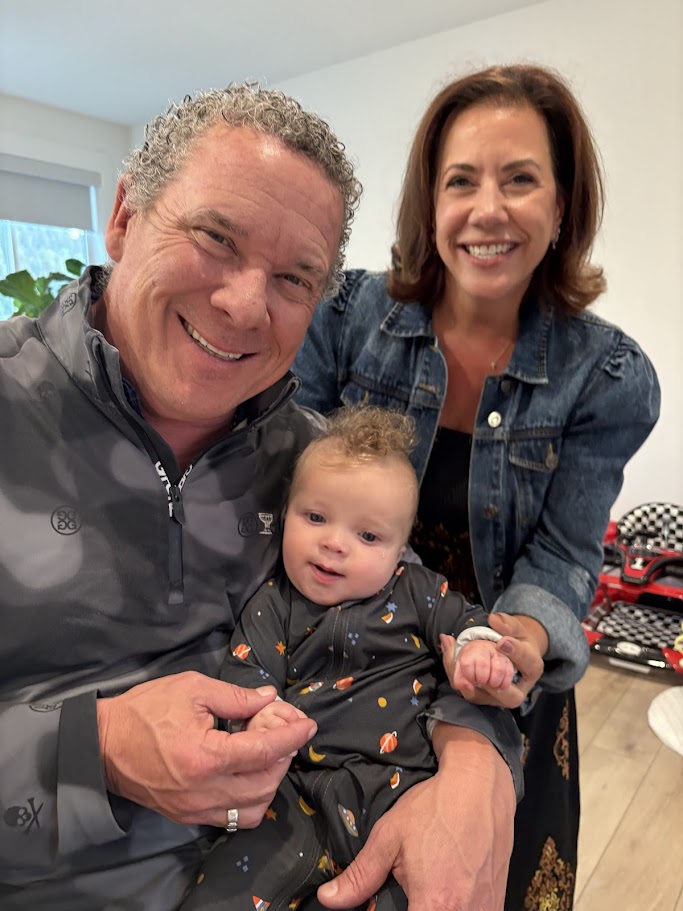
And now my daughter has her first baby.
My grandchild gets to grow up in a completely different environment than I did.
That is the prize.
Not status. Not applause. Not proving people wrong.
A different starting line.
That is what breaking the generational cycle really means. It means building enough stability, enough wisdom, and enough financial intelligence that your kids and grandkids do not have to start where you started.
That is the goal.
What I’d Leave You With:
If nobody taught you about money, that does not mean you are bad with money. It means you were not handed the map. So learn the rules. Get around people who think bigger. Stop waiting to feel ready. Build better habits. Keep elevating. The cycle does not break all at once. It breaks the moment someone in the family starts thinking differently, learning differently, and acting differently. And the fact that you’re reading this tells me the story could change with you.